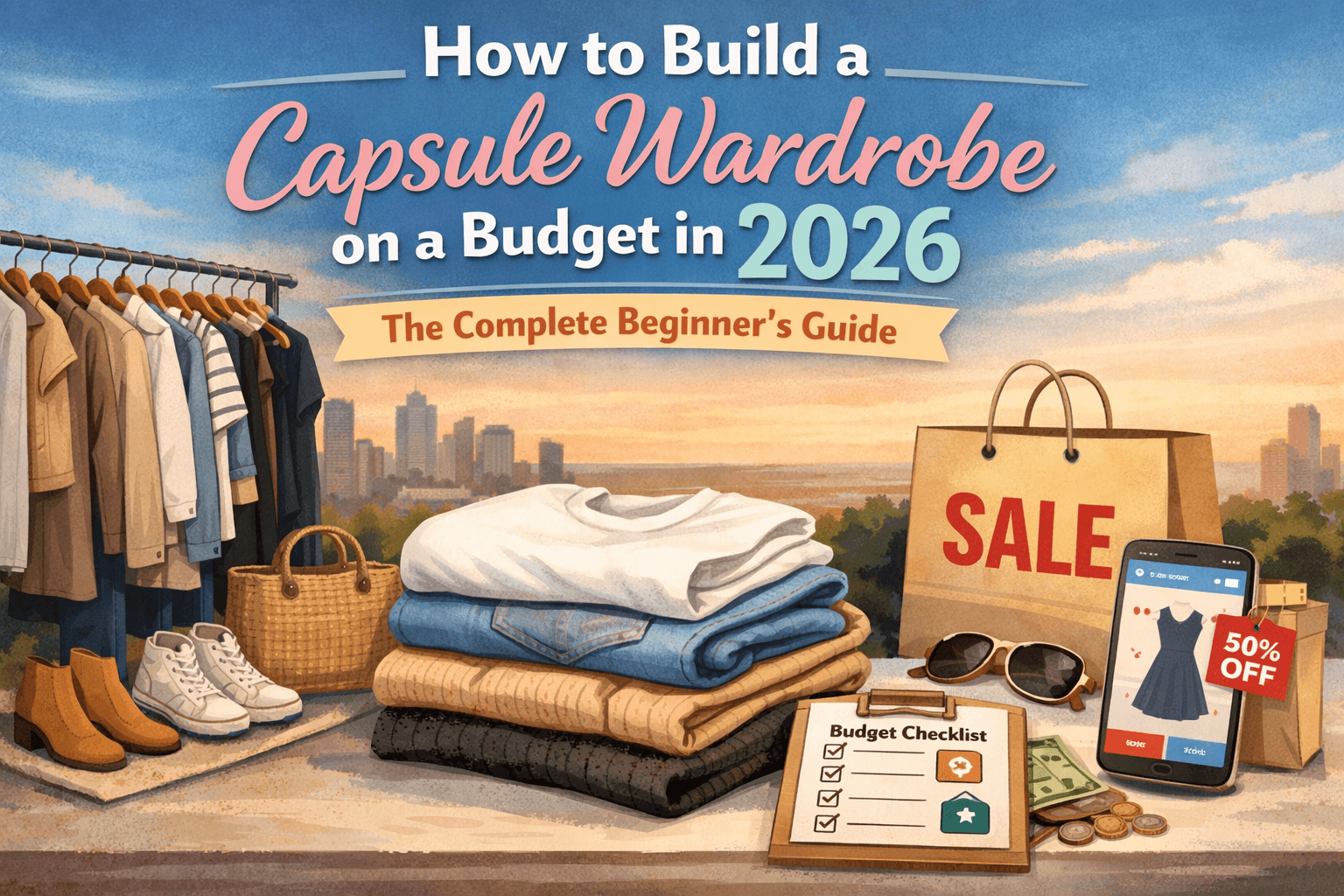
The Honest Truth About Your Wardrobe Right Now
You open your wardrobe. It is full of clothes. And yet, somehow, you have nothing to wear.
If that sentence describes your mornings, you are not alone, and you do not have a fashion problem. You have a structure problem. And the solution is one of the most talked-about, most searched, and most life-changing concepts in modern fashion: the capsule wardrobe.
I have been helping people build capsule wardrobes for 5 years. I have done it for teenagers staring down a school week with zero outfit ideas. I have done it for 25-year-olds starting their first job with a $200 budget and a box of clothes from university. I have done it for 40-something parents who have not felt genuinely stylish in years and do not know where to begin.
The process is the same for all of them. The pieces are slightly different. The results are always the same: a wardrobe that actually works, costs less, and makes getting dressed feel effortless rather than exhausting.
This is the guide I wish I had found when I started. Let's build yours.
What Is a Capsule Wardrobe and Why Does It Work in 2026?
A capsule wardrobe is a small, carefully edited collection of versatile clothing pieces that can be mixed and matched to create a wide range of outfits. Instead of owning 150 items that rarely work together, you own 25 to 35 items that always do.
The term was coined by Susie Faux, a London boutique owner, in the 1970s. It was later popularised by fashion designer Donna Karan, who introduced the concept of seven interchangeable pieces as the foundation of a modern woman's wardrobe. In 2026, the idea has never been more relevant, or more searched.
According to data from Depop's 2026 Trends Report "The Edited Self", consumers are actively moving away from trend-chasing and toward wardrobes built on quality, repeatability, and personal intention. The capsule wardrobe market was valued at $1.3 billion in 2023 and is projected to reach $2.6 billion by 2030, growing at a compound annual rate of 10.5%. This is not a passing trend. It is a structural shift in how people think about clothing.
Here is why building a capsule wardrobe on a budget works in 2026 specifically:
It saves money: A $120 pair of jeans worn 120 times costs $1 per wear. A $40 pair worn twice costs $20 per wear. Cost-per-wear, not sticker price, is the real measure of budget fashion.
It saves time: When every piece in your wardrobe works with every other piece, getting dressed stops being a daily decision battle and starts being automatic.
It reduces waste: Fewer impulsive purchases mean less textile waste, a growing concern in a world where the fashion industry still produces 92 million tonnes of textile waste annually, according to United Nations Environment Programme data.
It works for every age, every budget, and every lifestyle. That is the whole point of this guide.
Before You Buy Anything, The Wardrobe Audit
The single biggest mistake people make when building a capsule wardrobe is opening a shopping app before they have looked at what they already own. Do not do that.
Before you spend a single pound or dollar, do a wardrobe audit. This step will save you money, reduce overwhelm, and reveal that you probably already own more capsule pieces than you think.
Here is exactly how to do it:
Pull everything out.
Yes, everything. Lay it on your bed, your floor, or a rack, wherever you can see it all at once. This is the most important step because you cannot make decisions about what you own until you can actually see all of it.
Sort into three piles.
Pile one is things you wear regularly and genuinely love. Pile two is things you own but rarely or never wear. Pile three is things that are worn out, do not fit, or you genuinely do not like.
Be ruthlessly honest
If you have not worn it in the past six months and you cannot think of three ways to style it with what you already own, it does not belong in your capsule. Donate it, sell it on Depop or Vinted, or pass it to someone who will wear it.
Identify your gaps
Once your "wear regularly and love" pile is sorted, lay it out and look at what is missing. Are you short on good-quality basics? Do you have no outerwear that works? Are all your tops similar and your bottoms mismatched? These gaps are your shopping list, not trends, not things you saw on Instagram, but actual holes in your existing wardrobe.
I personally did this exercise two years ago and went from a wardrobe of 130 items to a capsule of 31 pieces. I have spent less on clothes since then than in any previous year. And I feel more stylish every single day.
How to Choose Your Capsule Colour Palette
Your colour palette is the engine of your capsule wardrobe. Get this right, and everything mixes and matches effortlessly. Get it wrong, and you have 30 pieces that cannot be worn together.
The rule that has worked for every person I have helped with their wardrobe is the 70/30 colour split:
70% neutrals. Black, white, grey, beige, camel, navy, cream, and olive are the backbone. These tones mix with absolutely everything and form the majority of your capsule.
30% accents. This is where your personality comes in. Choose one or two accent colours you genuinely love and wear consistently, a warm rust, a deep green, a dusty pink, a cobalt blue. These accent pieces are what make your capsule feel like yours rather than a generic Pinterest board.
A practical palette example:
Neutrals: Black, white, cream, navy
Accents: Terracotta and forest green
With this combination, everything mixes. Your black jeans work with your white tee, your cream knit, your terracotta blouse, and your forest green jacket. Your navy trousers work with every top you own. You can dress for ten different occasions using the same 25 pieces without ever repeating an outfit combination.
What to avoid:
Do not try to include every colour you like. A wardrobe with red, yellow, purple, pink, and orange pieces alongside neutrals creates chaos, not outfits. Choose your accents deliberately and stick to them across the season.
The Essential Capsule Wardrobe Checklist, 25 Pieces for Every Budget
This is the list. Print it, save it, screenshot it. These 25 pieces form the complete foundation of a functional capsule wardrobe that works across every age group, every lifestyle, and every budget.
I have helped build hundreds of capsule wardrobes using this framework. Every single piece listed here has been personally worn, tested, and verified as genuinely versatile.
Tops (7 pieces)
White or cream basic tee: The single most versatile piece in any wardrobe. Works with everything. Buy the best quality you can within your budget. Uniqlo's Supima cotton tee at $15-$20 is the benchmark for quality at this price.
Black or navy tee: Your second essential top. Same rules as above, but for a darker neutral.
Classic white or light blue shirt (button-down): Tuck it in, leave it open as a layer, tie it at the waist, wear it to an office or a beach. This is one of the hardest-working pieces in any capsule.
Neutral knit sweater or jumper: Beige, grey, or camel works best. Goes over your shirt for work, over your tee for weekends, and alone for evenings. The V-neck version elongates and works with more necklines.
Striped or subtly patterned top: Your one printed piece in the tops section. Stripes are timeless and work across every age group. This is where you add some visual interest without breaking the mix-and-match logic.
Tank top or camisole: Essential for layering under shirts, blazers, or cardigans. Neutral tone, black or white. This is a workhorse piece, not a statement piece.
Your one trend-driven top: One seasonal or trend-led top that reflects what feels current and exciting to you right now. This is your 30% speaking. Keep it in a colour that works with your neutrals.
Bottoms (5 pieces)
Well-fitting straight-leg or wide-leg jeans in mid or dark wash: According to Who What Wear's 2026 capsule wardrobe guide, straight-leg and wide-leg jeans continue to anchor the chicest wardrobes this year. Buy one pair that fits perfectly and wear them constantly.
Black trousers or tailored pants: The formal or smart-casual counterpart to your jeans. These take you from office to dinner to events. A mid-weight fabric in a clean cut is the most versatile choice.
Neutral chino or casual trousers: Beige, stone, or olive works here. More relaxed than your tailored trousers but more put-together than jeans. Essential for the in-between situations that all of us face constantly.
A skirt or shorts (season-dependent): For warmer months, a midi skirt in a neutral or your accent colour is one of the most versatile and flattering pieces you can own. For cooler climates, substitute a second pair of trousers.
Leggings or joggers (lifestyle-dependent): Not every capsule needs these, but if your lifestyle includes early mornings, the gym, or casual weekends, one pair of high-quality leggings or clean joggers earns its place.
Dresses and One-Piece Outfits (2 pieces)
A versatile day-to-evening dress: This piece carries more weight than almost anything else in a budget capsule because it removes the need for a top-and-bottom combination entirely. A midi length in a solid neutral or your accent colour, in a fabric that can be dressed up or down, is the goal.
A casual dress or jumpsuit: For warm weekends, casual plans, and days when you want to get dressed without thinking. This is the easiest, most effortless piece in your entire wardrobe.
Layers and Outerwear (4 pieces)
A tailored blazer: Possibly the single hardest-working piece in a modern capsule wardrobe. Wear it over your tee with jeans for a smart-casual look. Wear it over your shirt for work. Wear it over a dress for an event. Who What Wear's fashion team notes the relaxed blazer as the cornerstone of an expensive-looking wardrobe on a budget, and I agree from personal experience.
A denim jacket or casual jacket: Your everyday casual layer. Goes over everything, works in every season as a transitional piece, and never goes out of style.
A warm mid-layer (knit cardigan or zip-up): For days when your sweater is not quite enough but your coat is too much. A long or oversized cardigan in a neutral is ideal.
A coat or heavy jacket: One excellent outer layer per season. This is the piece worth spending slightly more on because you wear it every day for months. A classic camel, navy, or black coat will serve you for years.
Shoes (4 pieces)
White or clean neutral trainers/sneakers: The most versatile casual shoe available in 2026. Works with jeans, dresses, trousers, and skirts. Clean and simple.
Black or tan ankle boots or loafers: Your smart-casual to formal shoe. Elevates every outfit instantly. A classic shape rather than a trend-driven silhouette will last you three to five years minimum.
A simple flat sandal or summer shoe (season-dependent): For warmer months, one pair of clean, strappy flats or sandals that works with both casual and smart outfits.
One pair of heels or elevated shoes (lifestyle-dependent): Only if your lifestyle genuinely calls for them. A block heel or kitten heel in black or nude is the most versatile option.
Accessories (3 pieces)
A structured handbag or tote: One bag that works for daily use, big enough to carry what you need, neutral enough to work with everything you own.
A simple belt: In black or tan. Cinches a blazer, defines a dress, elevates wide-leg trousers. A small detail that makes a significant visual difference.
A scarf or simple jewellery piece: Your one rotating accessory. A silk scarf can be worn in twelve different ways. A simple gold or silver chain changes the energy of any outfit. This is where you play without adding clothing items.
Building a Capsule Wardrobe by Age Group
The 25 pieces above form the universal foundation. But how you prioritise, what you spend, and what you emphasise within those 25 pieces depends on where you are in your life. Here is exactly how the capsule wardrobe approach adapts by age group.
For Teens (13-19): The School and Weekend Capsule
Budget range: $100-$250
Target piece count: 15-20
Building a capsule wardrobe as a teenager is genuinely one of the best style decisions you can make, not because you need to look a certain way, but because it teaches you how to dress with intention rather than impulse. It also saves real money that can go toward literally anything else you care about.
The Teenage Capsule Looks Slightly Different from the Adult Version
The blazer becomes less essential, and the denim jacket becomes more so. Trousers are replaced with more jeans, a light wash and a dark wash give you a range. One good hoodie earns a permanent spot that the adult capsule does not always include. Statement pieces can be slightly more trend-led because, at 16, experimenting with style is the entire point.
My Advice for Teens Building a Capsule on a Tight Budget
Start with what you already wear most. Genuinely, look at the three outfits you reach for every week and identify what those pieces have in common. That pattern is your personal style, and your capsule should be built around it, not around what you think you should be wearing.
Shop your friends' wardrobes. Clothing swaps cost nothing and often surface pieces you genuinely want.
Use Depop and Vinted for trend pieces specifically. If you want to try the fisherman cardigan trend or the wide-leg cords, look before committing. Buying secondhand means spending $8 instead of $50. If you love it, great. If not, relist it and get most of your money back.
Teenage Capsule Priorities in Order
Two pairs of versatile jeans (light and dark wash)
Three to four quality tees in neutral tones
One oversized hoodie
A denim jacket or casual overshirt
One pair of clean white trainers
One pair of ankle boots or versatile flats
One blazer or structured jacket for smarter occasions
Accessories to express personality without adding clothing bulk
Best budget-friendly brands for teens: Uniqlo for quality basics, H&M for seasonal pieces, ASOS Design for inclusive sizing and variety, Depop for trend experimentation, Vinted for basics at minimal cost.
For Young Adults (20-30): The First Proper Wardrobe
Budget range: $200-$500
Target piece count: 20-28
Your twenties are when you are figuring out who you are, professionally, socially, and stylistically, all at the same time. You might be starting a first job, living alone for the first time, navigating a social life that ranges from formal work events to casual brunches to nights out. Your capsule wardrobe needs to do a lot.
This is the age group I work with most often, and the most common mistake I see is buying for an aspirational version of life rather than actual life. If you work in a creative or casual office, you do not need five formal blazers. If your evenings are mostly casual dinners and drinks, you do not need six occasion dresses. Buy for the week you actually live, not the week you imagine.
The Young Adult Capsule Focuses On
Versatility across work and social settings: This is where the tailored blazer earns its full value; it is the single piece that moves most convincingly between casual and formal. A blazer over a tee with jeans is smart-casual. A blazer over your button-down with trousers is office-ready. A blazer over a dress is evening-appropriate. One piece, three or four distinct occasions.
Quality over quantity: In your twenties, you are often tempted to buy many cheaper pieces rather than fewer better ones. Resist this. A $90 pair of well-constructed trousers will outlast three pairs of $30 trousers, cost the same overall, and look dramatically better. The capsule wardrobe philosophy is entirely built on this logic.
Room for personal expression: Your twenties are when your style solidifies. Use your 30% accent pieces to explore that: a bold colour, an interesting texture, a statement coat in a non-neutral shade. The 70% neutral foundation gives you the safety to experiment within the remaining 30%.
Young Adult Capsule Priorities in Order
The full 25-piece checklist above, with particular attention to the blazer and classic trousers
One excellent quality coat is a genuine investment
A versatile dress that covers both smart-casual and evening occasions
Clean white trainers and one pair of ankle boots or loafers
A structured bag that works for work and weekends
Best brands for young adult budget capsules: Zara for trend-adjacent pieces and outerwear, Uniqlo for basics, Mango for elevated affordable fashion, ASOS for sizing variety, and COS for when you want to invest slightly more in a timeless piece. Depop and Vinted for filling gaps secondhand.
For Midlife Adults (30-50): The Refined and Practical Capsule
Budget range: $300-$700 · Target piece count: 25-35
In your thirties and forties, your wardrobe needs have matured considerably. You likely know what you like, what suits you, and what you will actually wear. The capsule wardrobe approach is almost perfectly designed for this life stage; it rewards knowing yourself, rewards quality, and rewards consistency over novelty.
The Depop 2026 Trends Report describes this perfectly: "Consistency becomes the new flex. People are turning to dependable, neutral staples with sharp tailoring, boxy knits, and workwear classics as a way to express taste through repetition rather than constant reinvention." That is the midlife adult capsule in a sentence.
The Midlife Adult Capsule Focuses On
Elevated basics: At this stage, the quality of your basics matters enormously. A beautifully cut pair of black trousers, a cashmere or merino knit sweater, a properly tailored blazer, these pieces photograph well, wear well, and communicate effortless style in a way that cheaper equivalents simply cannot.
Longevity is the primary value: The 30-50 capsule should be built to last three to five years at its core, with two or three pieces updated each season. This is where brands like Everlane, Mango, COS, and, if budget allows. Reformation and Uniqlo's premium lines pay for themselves over time.
Practicality married to style: Life at this stage is complex: work, family commitments, social events, travel, and casual weekends. Your capsule needs to cover every scenario without requiring a completely separate wardrobe for each. The tailored trousers that work for a board meeting and a weekend lunch. The midi dress works for a parent-teacher evening and a dinner with friends. This is the art of the midlife capsule.
Midlife Adult Capsule Priorities in Order
Two or three genuinely excellent pairs of trousers in different weights and tones
A beautiful coat that works year-round as a layering piece
Elevated knitwear, a merino or cashmere option if budget allows
A blazer in your most-worn neutral
Two versatile dresses for smart and casual occasions
Quality footwear: ankle boots, loafers, and one pair of clean trainers
A structured handbag of genuine quality (secondhand options here are excellent value)
Best brands for midlife adult budget capsules: Mango for elevated yet affordable tailoring, COS for quality minimalist pieces, Uniqlo for premium basics at accessible prices, Everlane for sustainable organic foundations, Marks and Spencer (UK) or J.Crew (US) for reliable quality at mid-range prices. Vestiaire Collective and ThredUp for designer secondhand pieces that significantly upgrade your capsule without premium new prices.
How to Build a Capsule Wardrobe from Scratch on a Budget
Building a capsule wardrobe from scratch does not mean buying 25 new pieces at once. Nobody should do that, and nobody needs to.
Here is the step-by-step process I use personally and recommend to everyone:
Complete Your Wardrobe Audit First
Non-negotiable. You almost certainly already own some capsule pieces. Identify them before spending anything.
Build Your 5-7 Hero Pieces First
Rather than buying all 25 pieces in one go, identify your biggest gaps and fill the five to seven most important ones. Wear those for two weeks. You will quickly understand what else you need, and what you thought you needed but actually do not.
Use the "Rule of Three" for Every Purchase.
Before buying anything new, ask yourself: Does this piece work with at least three things I already own? If the answer is no, put it down. A piece that only creates one outfit is not a capsule piece; it is a costume.
Buy Secondhand First, Then New
For every piece on your list, search Depop, Vinted, or ThredUp before buying new. You can find Uniqlo basics, COS pieces, and even Mango and Zara items secondhand at 50-80% below retail. This is the single most powerful way to build a high-quality capsule on a low budget.
Invest in These Three Pieces Above Everything Else
If you have limited money and can only buy well in a few areas, prioritise these:
Your jeans or trousers, you wear them every day, so the cost-per-wear is enormous.
Your coat, one excellent coat, transforms every outfit beneath it.
Your shoes make expensive outfits look cheap.
Care for What You Own
Wash clothes on a cold cycle, air dry when possible, and store knitwear folded rather than hung. Proper garment care can double the lifespan of your capsule pieces, which is, effectively, the same as halving their cost.
Rough budget breakdowns by spending level:
Budget | How to approach it |
Under $150 | Start with secondhand only. Fill 10-12 essential gaps from Depop, Vinted, or H&M sale. Build from there over 3-6 months. |
$150-$300 | Mix secondhand basics with new purchases from Uniqlo and H&M. Prioritise jeans, a blazer, and a coat. |
$300-$500 | Add one or two quality investment pieces from Mango, COS, or Everlane. Fill the rest from secondhand and Zara. |
$500-$700 | Build a largely complete capsule with intentional quality pieces. Prioritise longevity over trend-led choices. |
The 70/30 Rule: How to Add Trends Without Ruining Your Capsule
One of the biggest misconceptions about capsule wardrobes is that they are boring. That you have to dress in all-grey neutrals forever. Those trends are banned. None of that is true.
The 70/30 rule is the framework that makes a capsule wardrobe both functional and genuinely stylish:
70% of Your Capsule is Timeless
Classic denim, white tees, neutral knitwear, tailored trousers, clean trainers, and a quality coat. These pieces never go out of style, work in every decade, and form the stable backbone of your wardrobe.
30% of Your Capsule is Current
This is where trends, personality, and the present moment come in. In 2026, the 30% might include a cinched-waist blazer, a wide-leg trouser in a slightly trend-forward cut, a knit polo, or a single statement accessory. According to Who What Wear's 2026 anti-trend capsule guide, the chicest wardrobes this year are blending timeless staples with subtle updates, not chasing every trend, but not ignoring them entirely either.
The 30% pieces are also the ones to buy secondhand or spend less on, because they have a shorter relevance window. The 70% timeless pieces are where quality and longevity matter most and where it is worth spending slightly more.
A Practical 2026 Example of the 70/30 Split
Your 70%: Classic straight-leg jeans, white tee, neutral knit sweater, black trousers, classic white shirt, tailored blazer, denim jacket, camel coat, white trainers, ankle boots, simple day dress
Your 30%: A wide-leg trouser in an earthy tone, a ribbed polo neck, one statement accessory in a 2026 trend colour (the WGSN Colour of the Year for 2026 is Transformative Teal, a rich blue-green that works beautifully as an accent against neutral capsule foundations), and a single trend-forward layer.
How to Make 30 Pieces Feel Like 100 Outfits
This is the part people are most surprised by. Thirty carefully chosen capsule pieces can genuinely generate over 100 distinct outfit combinations. Here is how:
The 3-3-3 Starter Method
Take three tops, three bottoms, and three pairs of shoes from your capsule. Because every top should work with every bottom, that creates nine outfits minimum. Add the shoes, and you have 27 combinations from nine pieces. This is the mathematics of a capsule wardrobe working correctly.
Layering Changes Everything
A white tee with jeans is one outfit. Add a blazer, a different outfit. Add a denim jacket instead, different again. Add a scarf, different. The same base combination generates four or five distinct looks purely through layering. Your blazer alone multiplies every outfit it touches.
Accessories Multiply Further
A simple outfit with white trainers is casual. The same outfit with ankle boots is smart-casual. With a silk scarf, editorial. With bold earrings, evening. Accessories are the cheapest and most powerful outfit multipliers available, and they add zero bulk to your wardrobe.
The 3-way Rule for Every Single Piece.
Every time you wear something, style it three different ways in your head. You will be surprised by how quickly you discover combinations you never considered before. This mental habit is what separates people who "have nothing to wear" from people who always look put-together effortlessly, and the wardrobes themselves are often the same size.
Outfit formulas that always work:
Jeans + tee + blazer + trainers = smart-casual for almost any occasion
Tailored trousers + knit sweater + loafers = polished and effortless
Midi dress + ankle boots + belt = one-piece outfit that looks entirely deliberate
Button-down shirt + wide-leg trousers + clean trainers = relaxed but considered
Tee + denim jacket + jeans + boots = weekend classic that works at every age
The Best Affordable Brands for Building a Capsule Wardrobe
You do not need to spend a lot to build a good capsule. You need to spend smartly. These are the brands I recommend most consistently for budget-conscious capsule building in 2026, with honest notes on where each one excels.
Uniqlo
The foundation brand. Their Supima cotton tees, Heattech basics, cashmere sweaters, and Ultra Light Down jacket are among the best value-for-money garments available anywhere at any price point. I have worn Uniqlo basics for 18 months or more without any quality degradation.
H&M
Best for seasonal basics and affordable trend pieces. Their cargo trousers, layering hoodies, and regular basics provide reliable quality at very low price points. Their Conscious Collection is worth looking at for more sustainable options within the range.
Zara
Best for structured pieces, outerwear, and trend-adjacent capsule items. Shop their blazers, coats, and trousers rather than their jersey basics for the best value and longevity. End-of-season sales offer serious markdowns.
Mango
Best for elevated, European aesthetic capsule pieces at a step above fast fashion quality. Their blazers, knit dresses, and ankle boots are consistent standouts.
ASOS Design
Best for inclusive sizing and variety across all capsule categories. Always read the reviews and prioritise items with 100+ ratings.
COS
Best for investment-level minimalist capsule pieces that genuinely last. Slightly higher price point, but exceptional construction and timeless silhouettes.
Everlane
Best for organic and transparent supply chain basics that form excellent capsule foundations. Their classic trousers, tees, and denim are well-priced for the quality.
Depop
Best for secondhand brand-name pieces at 50-80% below retail. My first recommendation for any capsule piece before buying new.
Vinted
Best for secondhand everyday basics and wardrobe foundations at the lowest prices. Ideal for filling practical gaps without significant spend.
Frequently Asked Questions
What is a capsule wardrobe?
A capsule wardrobe is a small, carefully chosen collection of versatile clothing pieces that can be mixed and matched to create many different outfits. Instead of owning hundreds of clothes, you own 25-35 items that all work well together, saving you time, money, and the daily frustration of standing in front of a full wardrobe feeling like you have nothing to wear.
How many pieces should a capsule wardrobe have?
Most capsule wardrobes work well with 25 to 35 pieces, including tops, bottoms, outerwear, and shoes. Beginners should aim for 20 to 25 pieces and build from there. The right number depends on your lifestyle; someone who works from home has different needs than someone who commutes, attends formal meetings, and has an active social life. The goal is right-sized for your real life, not a fixed number.
How much does it cost to build a capsule wardrobe on a budget?
You can build a solid capsule wardrobe for $150 to $400, depending on where you shop and how many pieces you already own. Starting with what you already have, then filling gaps with affordable brands like Uniqlo, H&M, and Zara, or secondhand from Depop and Vinted, keeps costs very manageable. You absolutely do not need to buy everything at once. Building over three to six months is more sustainable financially and stylistically.
What are the most essential capsule wardrobe pieces?
The nine non-negotiable essentials for any capsule wardrobe are: a white or neutral tee, a well-fitting pair of jeans, a tailored blazer, a classic button-down shirt, a neutral knit sweater, a pair of versatile trousers, a reliable coat or jacket, clean neutral trainers, and one pair of ankle boots or loafers. These nine pieces alone can generate dozens of distinct outfit combinations.
Can you build a capsule wardrobe as a teenager on a budget?
Absolutely. Teens can build a great capsule wardrobe starting with 15 to 20 pieces by shopping basics from H&M and Uniqlo, then adding secondhand pieces from Depop or Vinted for trend experimentation. Focus on two pairs of jeans, three or four quality tees, a hoodie, a denim jacket, and one pair each of trainers and ankle boots. Accessories, such as a belt, a scarf, or simple jewellery, multiply your outfits without adding more clothing items.
What colours work best in a capsule wardrobe?
The most effective capsule wardrobe uses 70% neutral tones, black, white, grey, beige, navy, and camel, and 30% accent colours or patterns you genuinely love and wear consistently. This ratio ensures everything mixes and matches automatically while still reflecting your personal style. Choosing accents in shades like terracotta, forest green, cobalt blue, or, for 2026 specifically, Transformative Teal (WGSN's 2026 Colour of the Year) adds personality without breaking the logic of your capsule.
How do I build a capsule wardrobe from scratch with no money?
Start with a wardrobe audit of what you already own. Most people already possess several capsule pieces without realising it. Then host or attend a clothing swap with friends; this costs nothing. Source secondhand pieces from Depop and Vinted, where $5-$15 can fill genuine gaps. Build slowly and intentionally over two to three months rather than trying to buy everything at once. A capsule wardrobe built gradually with intention beats one bought hastily with money you do not have.
What is the 70/30 rule in a capsule wardrobe?
The 70/30 rule means 70% of your capsule wardrobe should be timeless, versatile basics, jeans, plain tees, neutral knitwear, tailored trousers, and 30% can be trend-driven or personality-led statement pieces. This keeps your wardrobe both functional and genuinely current without ever feeling boring or outdated. The 30% is where your individual style speaks.
How do I stop buying things I do not need for my capsule wardrobe?
The most effective habit I have found, and recommend to every reader I work with, is the "Rule of Three." Before buying any new piece, ask: Does this work with at least three things I already own? If the answer is no, do not buy it. Additionally, the "30-wear rule" is powerful: if you cannot honestly picture wearing a piece at least 30 times, the cost-per-wear does not justify the purchase. Combine these with a 24-hour cooling-off period for any non-essential purchase, and impulsive buying becomes almost impossible.
Is a capsule wardrobe suitable for plus-size or petite figures?
Absolutely. A capsule wardrobe works for every body type and is in many ways more powerful for plus-size and petite dressers because it forces you to find pieces that genuinely fit and flatter your body rather than aspirationally buying things that look good on someone else. The principle of "does this work with at least three other things I own" is body-neutral; it is entirely about your wardrobe, not a generic size or shape. Brands like ASOS, H&M, and Everlane all offer extended and petite sizing across their capsule-appropriate basics ranges.
The Honest Bottom Line
A capsule wardrobe on a budget is one of the most genuinely empowering things you can build for yourself, at any age, at any income level, in any life stage.
It is not about owning less for the sake of minimalism. It is not about dressing in grey neutrals forever. It is not about being boring or not caring about fashion.
It is about owning smarter. Buying with intention. Getting dressed every morning in less than five minutes and genuinely feeling good about what you are wearing. It is about spending less on clothes overall while looking better than you ever have.
I have watched this transform how people feel about themselves, from teenagers who finally feel confident dressing for school, to 24-year-olds who have stopped dreading Monday mornings, to 45-year-olds who have rediscovered their personal style after years of dressing on autopilot.
Start with the wardrobe audit. Choose your palette. Fill your five hero pieces. The rest follows naturally.
If this guide helped you, I would genuinely love to hear about it. Drop a comment below and tell me where you are starting, which age group, which budget, and which piece you are tackling first. I reply to every single comment personally.
And if you know someone who always says, "I have nothing to wear," send them this. It might genuinely change how they start every morning.